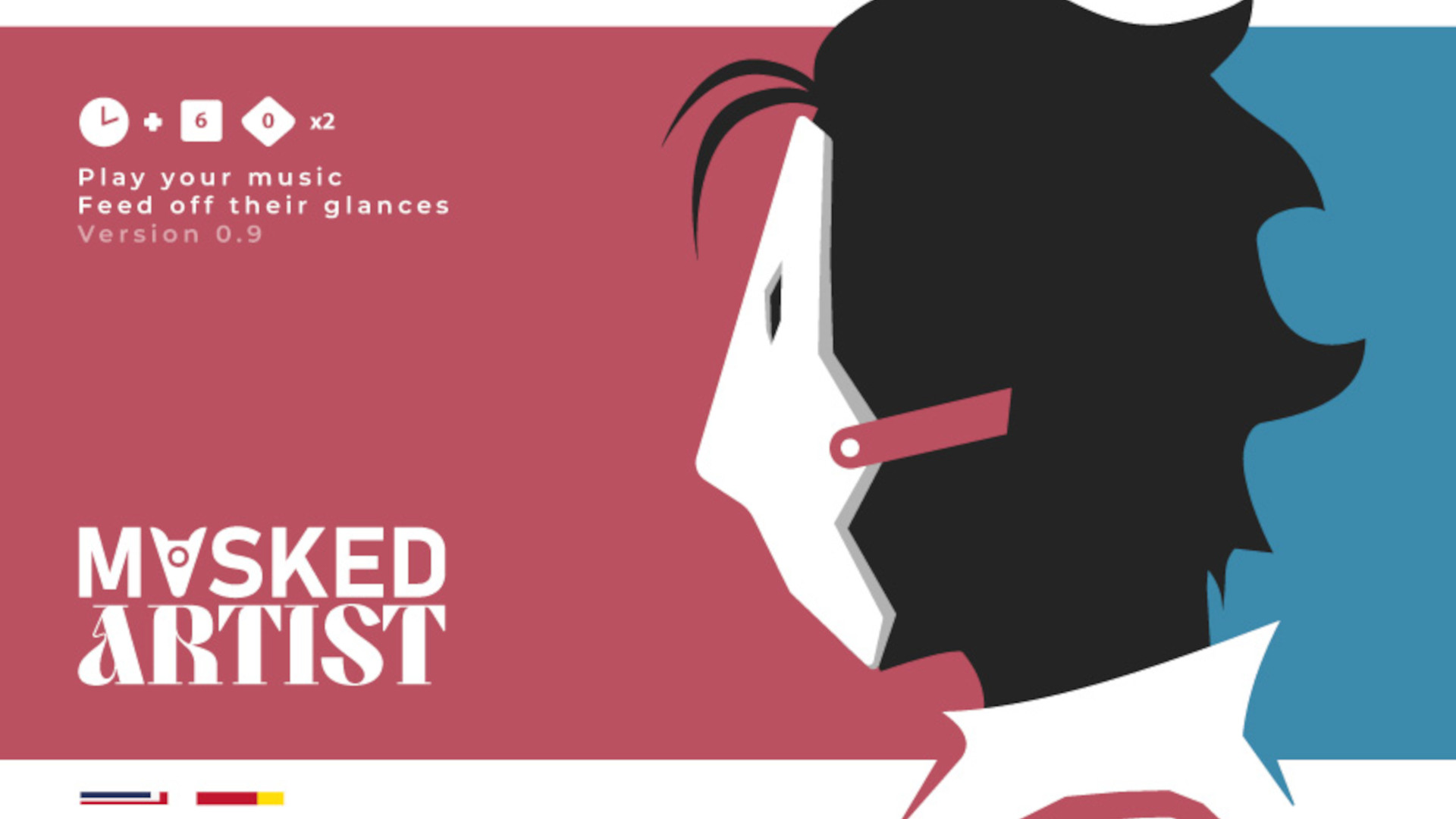
The life of an artist is rarely an easy one, as it often requires you to stand firm and protect your vision from people looking to corrupt it or make a quick buck from it. Masked Artist is a TTRPG that taps into this, chronicling the life of an artist trying to make their way in a harsh world while remaining true to themselves, no matter the cost.
Masked Artist drops players into the shoes of someone whose introduction to the art world was not a happy one. Ten years previously, when they were still young, their parents signed them up for an advertising agency. One of the commercials they were eventually cast in led to them becoming a viral star. This triggered a whirlwind career that saw them become a social media celebrity, as well as a film star and model. Originally, they had wanted to keep their musical passion and talent a secret. Alas, when their parents (and the flock of hangers-on now orbiting them) discovered it, they were forced onto a talent show and into a pop career.
Making Art Behind A Mask

But one night, they decided enough was enough. They liquidated part of their fortune and ran away. Donning an identity-obscuring mask, they began their music career afresh. However, this time they only write and play the music they want, opting to perform on the street rather than in a stadium or concert hall.
The game is broken into six phases. In the first phase, the player creates their musician by deciding which instrument they play, the genre of music they enjoy creating, and other similar character traits.
The second phase is creating the setting. Before this phase starts, the player should start playing the song they imagine their performer playing (or one similar to it). Then the player uses the current real-world date and time to discover where their musician is playing, what the weather is like, and the general mood of the world.
Once this is decided, the player’s musician heads to their location and prepares to play. This begins the Spectator Generation phase, where the player generates a specific, interesting, or eye-catching spectator that their musician will be playing to. To do this, the player rolls a ten-sided die across several tables to learn about a specific viewer’s age, gender, origin, obvious feature, and starting initial. After these questions are answered (and until the current song finishes playing), the player can use the roll table of adjectives to learn anything else they want to know about the spectator.
Once the song ends, the player rolls a D66 and a D100 to discover a prompt that defines their interaction with this spectator, as well as an adjective that defines how their character responds to the situation outlined in the prompt.
If the player positively responds to the prompt, a fifth phase, dubbed the Interaction Scene, begins. During this, the player rolls 2D6 and checks the table to learn if the interaction is good or fails to even begin. After this, players repeat the Spectator process as many times as they want before progressing to the final phase, dubbed Ending The Day.
During this time, the player rolls several six-sided dice to learn where their performer spends the night and the questions they contemplate before falling asleep.
Capturing The Messy Nature Of Performance

Masked Artist is a wonderful solo TTRPG that perfectly captures the pain many artists endure as they attempt to balance staying true to themselves and connecting with their audience. The game’s prompts are deliciously evocative, really helping you immerse yourself in their character and their complex internal life, meaning Masked Artist is a game that is hard to put down once you start playing.
I’m a big fan of Masked Artist’s prompt writing. While Masked Artist doesn’t have traditional failure states (which is fitting, as busking is never a life-or-death situation), the prompts leave room for interactions to go poorly, from conversations never getting off the ground to awkward interactions where your performer and the spectator are clearly on different wavelengths. This means that the game feels really realistic, capturing the fact that both art and human interaction don’t exist within a binary state and are often messy, further increasing the game’s immersion.
Plus, I also adore the game’s decision to encourage players to play music during the session. While this may seem like a small detail, picking the right song really helps you immerse yourself in your Masked Artist persona and gives you more things to work off when you have to answer prompts (as there is a high chance what the spectator says to your character will be inspired by the song you were playing), further adding to the game’s immersion.
Another nice touch is that many of the Spectator Generation questions come with multiple roll tables. Plus, the prompts with only a single table tend to have wide enough options that no two Spectators will come out alike. This helps keep the game fresh by making sure that you don’t get several overly-similar Spectators in a row, meaning that Masked Artist has plenty of replay value.
This is enhanced by Masked Artist’s fantastic layout. Each page of the TTRPG represents a specific phase of the game and a single part of the main character’s process. Combine this with the eye-pleasing color palette and tasteful, well-chosen art, and Masked Artist looks great while remaining easy-to-follow, even for players who have never picked up a solo-TTRPG before.
Masked Artist is a must-play solo game for TTRPG fans. The game takes a complex concept and transforms it into an immersive and easy-to-play TTPRG game, without sacrificing the emotional complexity that makes the concept interesting. Combine this with its excellent writing and fantastic layout, and you have one of 2026’s most fascinating solo-TTRPG experiences, one that is sure to leave you thinking about your relationship with art.