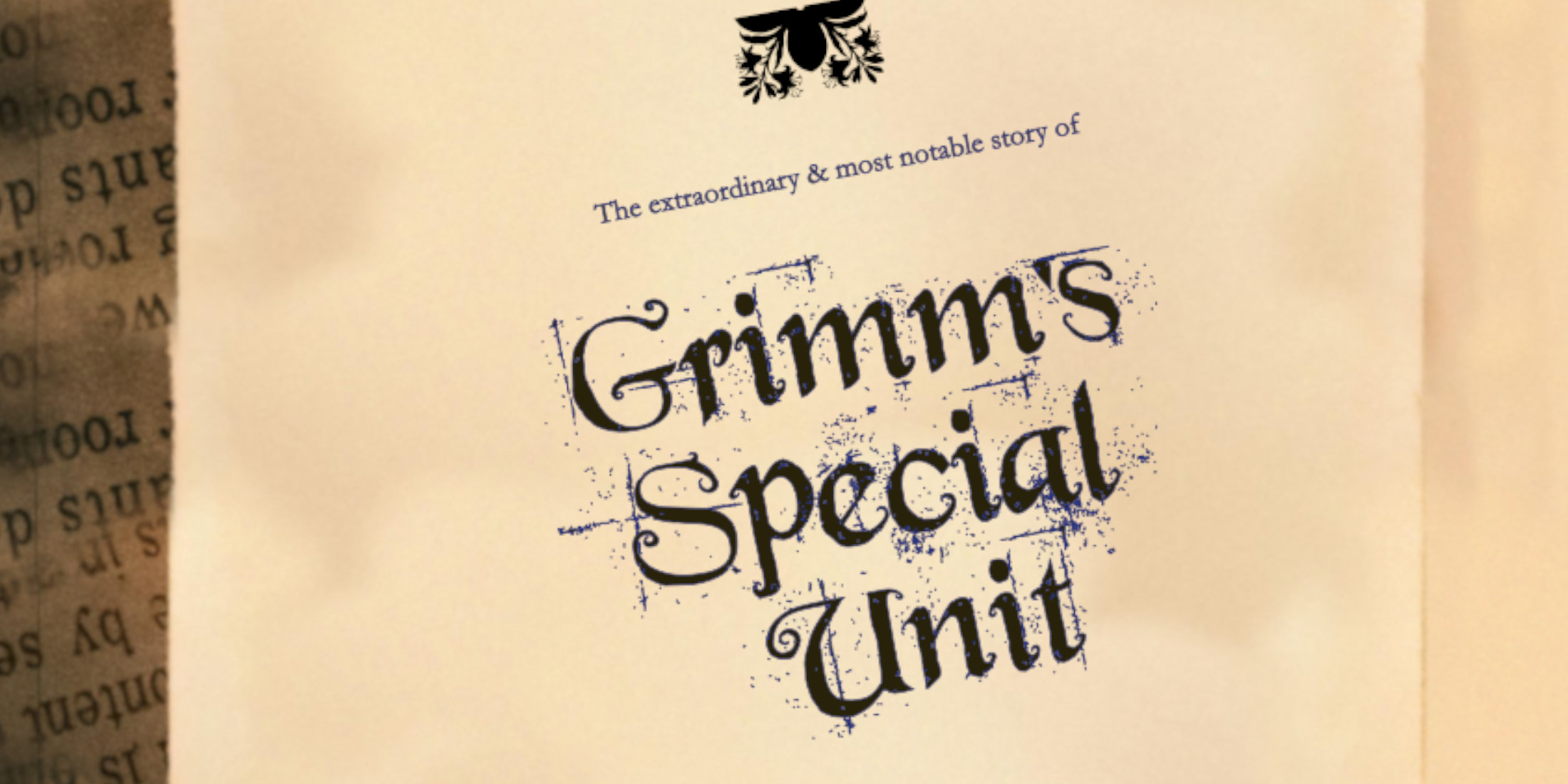
Fractured fairy tales are always a fun setting for TTRPG games. The inherent looseness of the fairy tale genre allows GMs and players to explore numerous themes and subject matters in hundreds of different ways, meaning that no two stories will be exactly alike. Grimm’s Special Unit taps into this, taking the fairy tale setup and putting a unique TTRPG twist on it to create a fun game that’s sure to please any table looking for a tight one-shot experience.
Grimm’s Special Unit drops players into a world where fairy tale creatures, both good and bad, are real. Most regular people are unaware of these creatures because special agents work in the shadows, doing their best to stop evil supernatural threats before they can enact their plans and wreak havoc across the land. In this game, players take control of agents from the Hamlin branch of Grimm’s Special Unit, a town that is in the sight of several fairy tale evil-doers.
Witches, Wolves, And Pipers, Oh My!

The underlying game is based on the Havok engine, making it very simple to get the hang of. Player characters have six stats. However, rather than the usual setup, where each character has the same stat array and numbers are used to differentiate different levels of mastery, in Havok (and thus Grimm’s Special Unit), each character gets unique stats that describe something about themselves.
When a player encounters a situation that has a risk attached, they are asked to roll. By default, players roll two six-sided dice, but they get to add an extra D6 for each relevant stat or item they have. Each die that rolls five or above is counted as a success, and the more successes the player has, the better their chance at performing the action successfully. If they fail totally, something “unfavourable but interesting” happens.
Grimm’s Special Unit comes with 3 pre-made adventures, pitting the players against the Big Bad Wolf from Little Red Riding Hood, The Pied Piper Of Hamlin, and a forest witch (like the one from Hansel and Gretel). Each one consists of three acts (each featuring multiple challenges) and a final press conference. Additionally, the game comes with a load of pre-made characters, making this a fantastic one-shot or unplanned game night TTRPG.
Rule-Lite TTRPG That Capture The Fairy Tale Feel

The best thing about Grimm’s Special Unit is how it nails the fractured fairy tale atmosphere. Not only does the game’s writing bring it clearly to the forefront, but this atmosphere is also perfectly complemented by the game’s paper cutout art, which evokes the look of a classic fairy tale compendium.
I’m also a big fan of the included adventures; not only are they a great touch for a rules-lite one-shot game, but they are all fantastically written. Each one takes a classic fairy tale and puts a unique twist on it, meaning that players don’t feel confined by the original tale.
The Havok engine was also a perfect choice for this game. The open-ended stats system allows players to approach situations creatively, meaning that players can easily recreate Rumpelstiltskin and other classic fairy tale solutions naturally during play. Another advantage of the open stat system is that it allows characters to be vastly different from one another, as they don’t have to conform to a specific array of skills. This further adds to the fairy tale atmosphere, as most fairy tales focus on random, often ragtag groups of people thrown into situations beyond their understanding.
However, this stat system does come with one big downside: it can sometimes be a little tricky to understand what a stat is meant to mean, as the wording is sometimes a little too vague.
An example that arose during my play session concerned Dr. Kathrin-Nicola Ausdemhu, the game’s scientist character. While most of her stats (like “Physical-psychological bio-engineering,” “Cause bewilderment,” “Explain away the paranormal,” and “Get thoroughly bogged down in details”) make perfect sense, my players got very hung up trying to understand what the stat named “My friends call me Wiz” was meant to suggest.
One player saw it as a reference to the Wizard from The Wizard of Oz, convincing everyone he was someone he was not. Meaning that this stat suggested that Dr. Kathrin-Nicola Ausdemhu had a talent for disguise.
Another took it to be a nod to the old cliche “Mr [Surname] is my father; call me [Nickname]”, suggesting that Dr. Kathrin-Nicola Ausdemhu was an effortlessly cool Indiana Jones-type of scientist who was good in social situations.
A third player presumed this stat was a spin on the line “All sufficiently advanced science is indistinguishable from witchcraft,” (something that is referenced in the character’s biography), meaning that she could produce seemingly magical effects via Star Trek-style tech babble.
While interpreting the stats in fun and unique ways is part of the game’s charm, the fact that everyone had vastly different (and basically incompatible) readings of this stat did slow the game down significantly. It also forced the GM to make a ruling about the stat’s meaning, which, while not a deal breaker, does clash a little with how intuitive and rules-lite the rest of the experience is.
Thus, I would love to see future versions of this game add a sentence of flavour text for each stat to help guide players in the right direction, as this would help smooth over disagreements and make life easier for less confident players and GMs who don’t enjoy making on-the-fly rulings.
Grimm’s Special Unit is a really fun TTRPG that does a fantastic job of capturing the fairy tale feel. Plus, its rules-lite nature, combined with everyone’s natural familiarity with fairy tales, and its pre-written characters and adventures, means that this is a great game for people who want a fun experience they can pull out and start playing within thirty minutes.